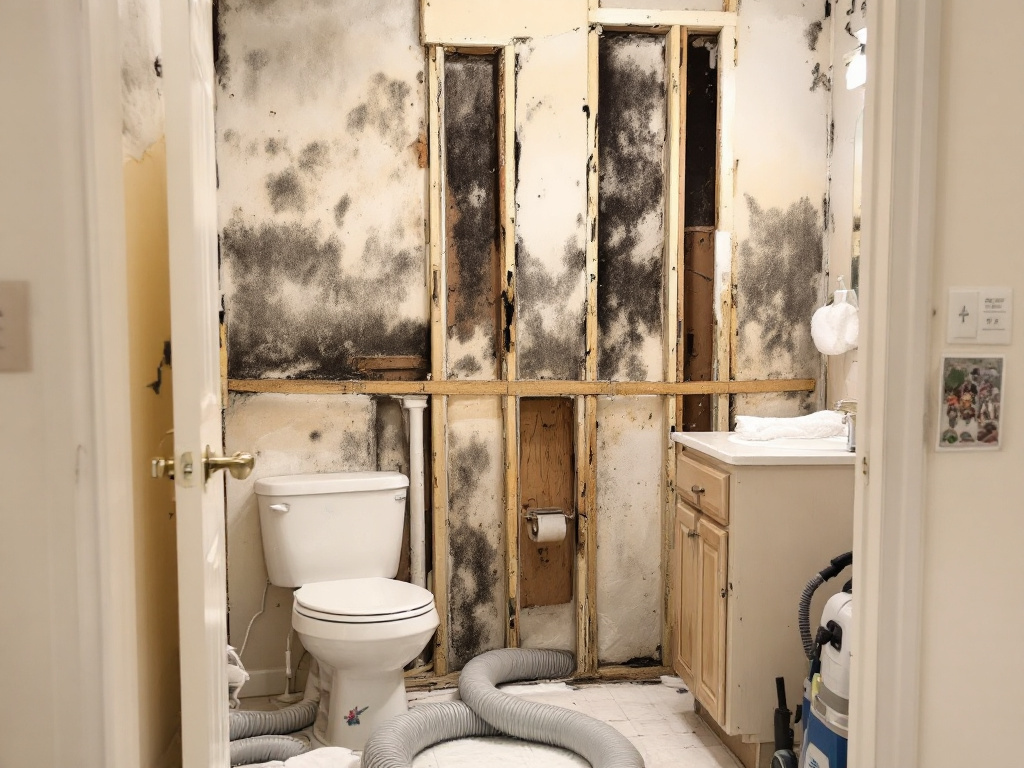
You want an inspection when you smell it but can't see it, when you can see it and need to know how far it goes, when you're buying or selling a house with a water history, or when an insurer or a remediator wants a written protocol before work starts. You don't need one for the mildew on the shower grout. The assessor's job is to find the moisture source, map the extent, and write a plan a licensed remediator can follow and a second inspection can clear.
A licensed mold inspection with sampling runs $300 to $1,000 (average about $500) depending on house size and number of lab samples; testing alone $50 to $700 (Fixr, January 31, 2025, source remediation-guide inspection figure $450 to $800, Fixr, August 29, 2025, source.
What a licensed inspection includes
A visual inspection of the whole house with attention to the usual DFW suspects: under sinks, around the attic air handler and water heater pans, the bottom of exterior walls on the north side, closets that back onto bathrooms, and anywhere a past leak was patched. Moisture readings with a pin meter and a thermal camera to find damp materials behind paint. Then sampling, if warranted: air samples inside compared to an outdoor control, and tape-lift or swab samples from visible growth, sent to an accredited lab. The report identifies species and counts, maps the affected area in square feet, names the moisture source, and gives a remediation protocol.
Square footage matters legally. Under 25 contiguous square feet, an owner may clean it themselves. At 25 contiguous square feet or more, Texas requires licensed remediation, a written protocol from a licensed assessor, and a post-remediation clearance inspection before the assessor issues a Certificate of Mold Damage Remediation on TDI form MDR-1. Your insurer and the next buyer of your house will ask for that certificate.
Signs you need one
- A musty smell in one room, a closet, or when the air conditioner starts
- A water leak or flood in the last 12 months that wasn't professionally dried
- Stains on drywall that are gray or black at the edges rather than yellow
- Allergy or asthma symptoms that ease when you leave the house
- A ceiling or wall patch from a previous owner with no record of what was behind it
- A home inspection on a purchase that notes moisture or past water damage
What it costs in Dallas-Fort Worth
Fixr's January 2025 guide puts a mold inspection at $300 to $1,000 with a national average of $500, which typically covers a 2,500-square-foot house with two samples and lab fees. Testing alone runs $50 to $700 depending on the number and type of samples: an air test $500 to $700, a surface stain test $150 to $200. An inspection without any sampling is $300 to $600. Fixr's August 2025 remediation guide puts an inspection billed separately at $450 to $800. The post-remediation clearance inspection is a second visit and a second fee, usually at the lower end.
Be wary of a free inspection from a company that also wants to sell you the remediation. In Texas that's a licensing problem for them and a conflict of interest for you. Pay for the independent assessment; it's the cheapest part of the job and it sets the scope for the expensive part.
What moves the price
Number of samples (each adds a lab fee), house size, whether the assessor has to open a wall or ceiling to look (drywall removal for testing runs $16 to $20 per square foot), and how fast you need the lab results back. A pre-purchase inspection with no visible mold and two air samples is the cheap end. A post-flood inspection of a whole first floor with a dozen samples and a written protocol for a remediator is the top end.
How long it takes
The on-site inspection takes one to three hours. Standard lab turnaround is three to five business days; rush is one to two at extra cost. The written report and protocol come with the results. If remediation follows, the clearance inspection happens after the remediator finishes and takes another visit plus lab time. Plan on two to three weeks from first inspection to certificate on a typical job.
What to ask
Ask for the TDLR license number and check it at the TDLR license search. Ask whether they do remediation (they shouldn't, on your job). Ask which lab they use and whether it's accredited. Ask whether the report will include a square-footage map and a protocol a remediator can bid from. Ask about the clearance inspection fee up front. And ask them to find the moisture source, because mold with the water still coming in grows back no matter who removes it.