Sewer backups in DFW come from tree roots in old clay sewer laterals, grease and wipes in the city main, and storm events that overwhelm the system; Carrollton's wastewater system spilled more than 300,000 gallons from manholes along Hutton Branch during the May 2015 floods. Whatever the cause, the work inside your house is the same, and the question of who pays (your insurer, the city, or you) comes after it's clean.
Sewage backup cleanup in DFW typically runs $2,000 to $10,000 at $7 to $15 per affected square foot, with $200 to $500 after-hours surcharges and rebuild extra (Bob Vila, February 15, 2024, source ThePricer, October 24, 2026, source.
How sewage cleanup is done
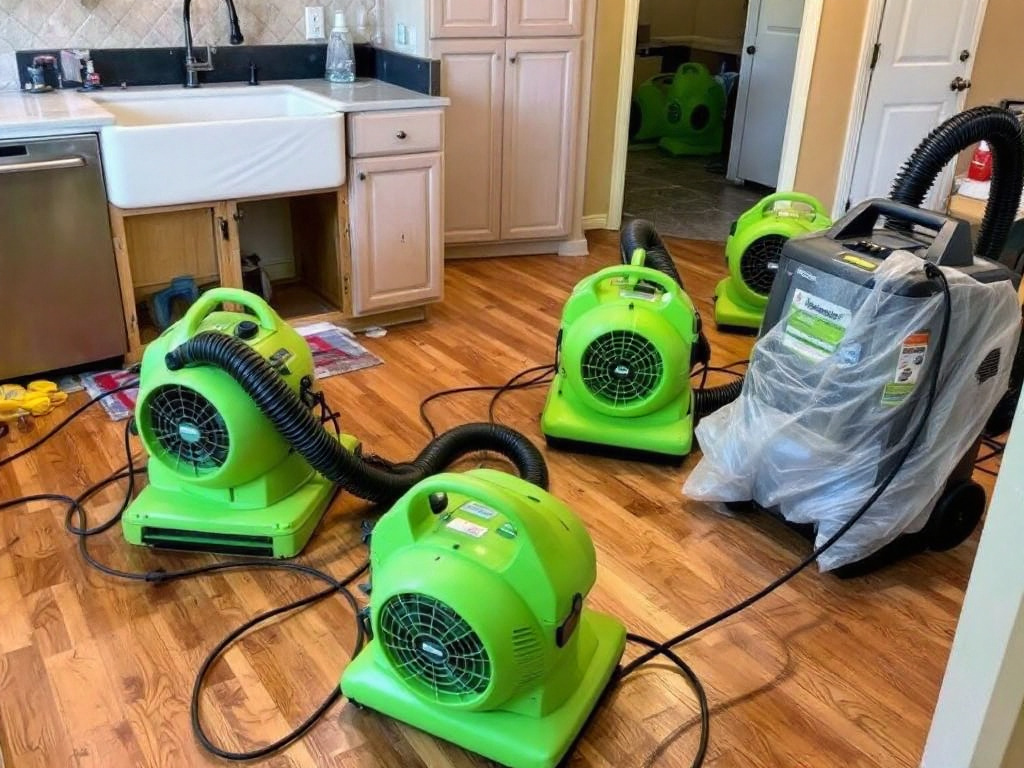
The crew contains the area with plastic sheeting and sets a negative-air machine so contaminated air isn't pushed into the rest of the house. Then extraction of the liquid and solids, removal of carpet, pad, laminate, any drywall and insulation the water touched (typically cut two feet above the waterline), particleboard cabinet bases, and contents that can't be sanitized. Hard surfaces are cleaned, then treated with an EPA-registered disinfectant, then cleaned again. Only after that does drying equipment go in.
Everything removed is bagged, documented with photos, and disposed of as contaminated waste. The crew's gear (respirators, suits, gloves, boots) is not optional, and the EPA's guidance is explicit that sewage-contaminated water calls for a professional experienced with it. Expect three to five days of drying after the cleaning, and expect the room to be sealed off from the rest of the house until the final readings are in.
Toilet overflows: Category 2 or 3?
A clean-water toilet tank leak is Category 1. An overflowing bowl with urine but no feces is Category 2. Anything with feces, or anything that came back up through the drain from the sewer line, is Category 3. The distinction matters for cost and for what gets saved. A Category 2 overflow caught quickly on tile may be a cleaning and drying job; a Category 3 backup into a carpeted hall is a tear-out. Tell the dispatcher honestly what came up; the crew needs to arrive with the right plan.
What it costs in Dallas-Fort Worth
Sewage is the black-water rate. Bob Vila's February 2024 guide puts Category 3 cleanup at $7.50 per square foot and most sewage backup jobs at $2,000 to $10,000; ThePricer's October 2026 guide puts professional cleaning at $7 to $15 per affected square foot, a contained small backup at $2,000 to $3,000, multiple rooms at $3,000 to $7,000, and an after-hours surcharge of $200 to $500. Fixr's January 2025 guide uses $7 to $7.50 per square foot for black water and cites a sewer-flooded basement at $50,000 as the extreme case.
Rebuild adds drywall at $2 to $4 per square foot, flooring at $4 to $15, and often new lower cabinets. Clearing the line is the plumber's bill, around $350 to $600 for hydro jetting, and if the lateral itself has collapsed, replacement runs by the foot.
What moves the price
Square footage touched and what was on the floor. Sewage on tile in a bathroom and hall is the cheap end because the hard surfaces can be sanitized. Sewage in carpeted bedrooms or under laminate is the expensive end because all of it comes out. Time matters: a backup found Monday morning that happened Friday night has soaked the drywall and bottom plates, and the smell has gone into the HVAC. Contents add to it; a backup in a home office full of paper and cardboard is a contents loss on top of a structure loss.
Who pays for a sewer backup
Most Texas homeowners policies don't cover water that backs up through sewers or drains unless you bought a sewer backup endorsement, which is cheap and worth asking your agent about. If the backup came from a blockage in the city main rather than your lateral, you can file a claim with the city; cities investigate and sometimes pay, but there's no guarantee and it takes months. Document everything regardless: photos, the plumber's report on where the blockage was, and the cleanup invoice.
How long it takes and what to ask
One to two days for containment, removal and sanitizing; three to five days of drying; then rebuild. Ask whether the crew treats toilet backups as Category 3 (the right answer depends on what came up, and they should ask you). Ask what disinfectant they use and whether it's EPA-registered. Ask for the photo inventory of removed items. Ask about air scrubbing and whether the HVAC ducts need cleaning. And ask the plumber to put in writing where the blockage was; it decides whether the city or your endorsement is on the hook.